
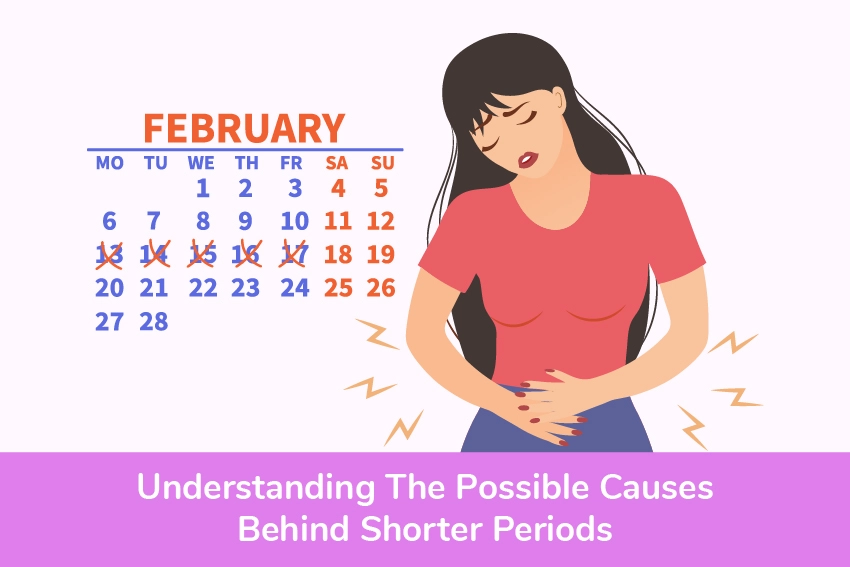
Understanding The Possible Causes Behind Shorter Periods
Have your periods recently become shorter or less regular than usual? A noticeable change in your cycle can leave you wondering about the cause. While occasional fluctuations might not seem serious, persistent changes cannot be ignored. Even a slight change in your menstrual cycle can lead to a complete shift in your menstrual cycle. From changes in lifestyle to medical conditions, there are many possible causes for light periods. This blog provides insight into the causes, medical conditions and when medical attention might become necessary. Read on to discover ways through which you can better support your reproductive health and general well-being.
A] What Counts As A Short Period?
A menstrual period is usually considered short when the duration of your bleeding becomes quite short. While most periods last between 3 and 7 days, this can vary from one woman to another. Here are certain signs you can notice:
- Bleeding that lasts only for 1-2 days
- Brown, pink, or light-colored spotting
- A sudden decrease in the menstrual flow
- Periods that end earlier than expected
Hormones such as oestrogen and progesterone regulate the buildup and shedding of the uterine lining. Any fluctuations in these hormones could lead to reduced period flow. Our well-woman clinic in the UK is designed to support reproductive health and early detection of potential health concerns.
Our healthcare is designed to support women through every stage of hormonal health
B] What Are The Most Common Causes Of Shorter Periods?
When hormonal levels change, there’s often a change in the amount and duration of menstrual bleeding. Factors such as stress, excessive exercise, sudden weight changes, pregnancy and others can all influence your period length and flow. Here are some common causes of light periods in many women:
1. Stress And Emotional Changes
Stress is commonly known to affect hormone production, which can create troubles with ovulation and menstrual regulation. This is because high levels of cortisol can easily disrupt the balance of both oestrogen and progesterone.
2. Hormonal Fluctuations
Hormonal fluctuations are one of the most common causes behind irregular and short periods. These changes could occur at several stages of life, which could involve puberty, breastfeeding, perimenopause and even during post-pregnancy recovery.
3. Birth Control And Medications
Birth control pills and certain medications can influence the hormone levels, ovulation or the thickness of your uterine lining. Some commonly associated contraceptives include hormonal IUDs, birth control pills, implants, and hormonal patches, among others.
4. Changes In Lifestyle
Sudden shifts in your daily routine can also lead to changes in your menstrual flow. These could involve sleep disturbances, poor nutrition, excessive physical exercise and significant weight loss, among others. Your cycle might improve when your body regains its hormonal balance.
5. Pregnancy-Related Changes
Implantation bleeding could occur if a fertilised egg attaches to the lining of the uterus during pregnancy. Unlike your regular cycle, implantation bleeding does not involve the same level of intensity or duration.
C] Can Medical Conditions Lead to Shorter Periods?
Sometimes, hormonal fluctuations could point towards underlying medical conditions. This is because your cycle is controlled by a complex interaction between your brain, ovaries, thyroid gland and reproductive hormones.
1. Perimenopause
Perimenopause represents the transitional stage leading up to menopause. During this time, your ovaries might not ovulate as regularly as before. This could result in your periods becoming shorter than usual. In addition to these changes, you might also experience hot flushes, night sweats, mood changes, sleep disturbances and fatigue, among others.
Also read: Key perimenopause symptoms you shouldn’t ignore.
2. Thyroid disorders
Both an underactive and an overactive thyroid can interfere with your menstrual cycle patterns. Thyroid disorders are often accompanied by symptoms such as hair thinning, low energy, weight changes, and mood changes, among others. As these symptoms develop gradually, they might not be immediately noticeable. A proper medical evaluation can help you identify the reasons that might be contributing to thyroid dysfunction.
3. Polycystic ovary syndrome (PCOS)
With PCOS, you might face trouble ovulating consistently. As a result, you might experience reduced menstrual flow, spotting between cycles, and irregular or short periods. Symptoms of PCOS can also vary from one woman to another. This can include acne or oily skin, excess body hair, weight fluctuations, thinning hair, and fertility challenges.
As a private gynaecologist in the UK, our services are focused on providing personalised assessment, diagnosis and support for women with PCOS. We treat PCOS not as a fertility-related issue but as a broad hormonal condition.
D] When Should You Seek Medical Advice
Occasional menstrual fluctuations can sometimes occur naturally. But if your periods become irregular, then it might be beneficial to seek professional advice. Medical evaluation becomes especially important if it is accompanied by symptoms such as fatigue, pelvic pain, acne, sleep disturbances and other fertility concerns. Here are some ways that can support your reproductive health over time:
- Prioritising rest, emotional well-being, and consistent sleep patterns.
- Balancing nutrition by including healthy fats, vitamins and minerals.
- Maintaining a balanced approach to physical activity.
- Avoid restrictive dieting or sudden weight changes.
Still have questions? Our experts are here to help.
Conclusion
Your menstrual cycle is closely connected with several systems within your body. Even small hormonal changes can affect how much the uterine lining builds up and sheds during menstruation. In some cases, short periods could develop during major life transitions such as puberty, breastfeeding or perimenopause. Even factors such as stress, exercise, PCOS, thyroid, or other hormonal changes could lead to changes in your cycle and menstrual flow. Contact us if you’re looking to make informed decisions by recognising the changes in your body. At Women’s Healthcare, our care is centred around a supportive and women-centred approach that feels personalised and responsive to individual needs.
FAQs

Mr Nilesh Agarwal
Mr Nilesh Agarwal (GMC: 6059455) is a highly esteemed consultant gynaecologist based in London, specialising in high-risk obstetrics, minimal access surgery, and fertility. With over 20 years of international experience, he provides comprehensive, patient-centred care for conditions including endometriosis, fibroids, and polycystic ovaries. Known for his holistic approach and clinical excellence, Mr Agarwal is dedicated to empowering women through tailored treatments. He currently practises at leading institutions, including the Clementine Churchill Hospital and the Hospital of St John & St Elizabeth.