
Key Perimenopause Symptoms You Shouldn’t Ignore
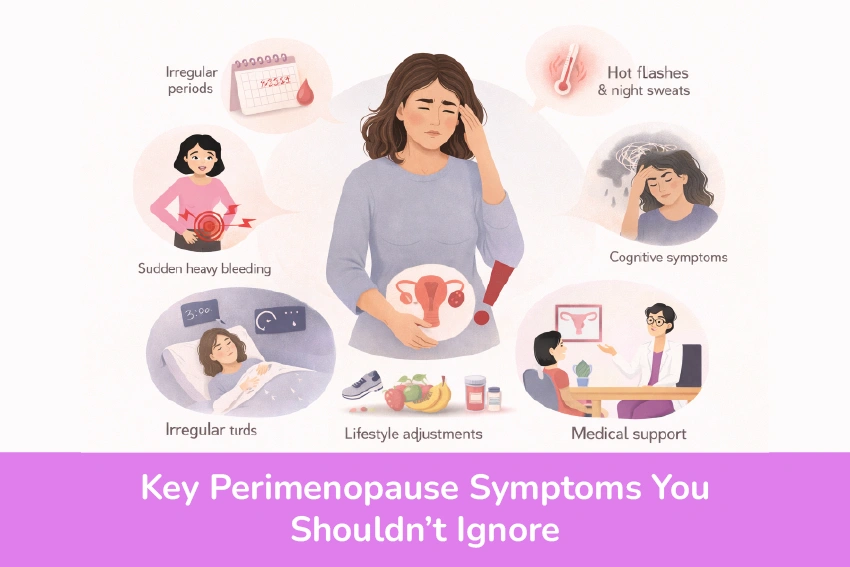
The period of life preceding menopause is called perimenopause. It is the beginning of a gradual shift where you start finding your body starting to move out of normal ovulation and monthly cycles. Perimenopause starts in their 40s, but some women can experience changes in their mid 30s. The common age for perimenopause is between 45 and 51 years, although the experience of each woman is unique.
When you have ever asked yourself how common perimenopause is, the easy way to go is: everybody who makes it to the age of midwomanhood has it. The symptoms, however, and their severity vary.
Being aware of the typical common perimenopause symptoms will make you feel less isolated and prepared. Being aware of what to expect also helps to attain the right support should the need arise.
A] Hormonal Changes During Perimenopause
The driving force behind perimenopause is shifting hormone levels. The ovaries begin producing fluctuating amounts of estrogen and progesterone. These hormonal changes during perimenopause don’t happen in a straight line; levels can rise and fall unpredictably from month to month.
This is why symptoms often feel confusing. Since hormones influence many systems in the body, including mood, sleep, metabolism, and temperature regulation, even small shifts can have noticeable effects.
Worried about perimenopause symptoms? Speak to a specialist now.
B] Common Signs of Perimenopause
Below are the common physical symptoms of perimenopause you shouldn’t ignore.
1. Irregular Periods
Changes in your menstrual cycle are often the first sign. Periods may become shorter, longer, heavier, lighter, or more spaced out. Some women skip periods altogether, only for them to return unexpectedly.
If you experience sudden heavy bleeding, it’s important not to ignore it and learn about the symptoms early.
2. Hot Flushes and Night Sweats
Hot flushes are sudden waves of heat, often affecting the face, neck, and chest. They may last a few seconds or several minutes. Similar events are night sweats, which happen in sleep, and can occasionally be so intense as to wet nightclothes or bedding.
These are the symptoms associated with falling and changing estrogen levels. In other women, they are mild and infrequent.
3. Sleep Disturbances
Sleep is a problem for many women in perimenopause. You might experience difficulty in falling asleep, night awakening, or waking up earlier than usual. Night sweats can exacerbate this.
C] Emotional and Cognitive Changes
The perimenopause not only impacts the body but also has an impact on emotions.
1. Mood Swings and Anxiety
You may find yourself a bit more hypersensitive, emotional, or angry than usual. Other women feel new or more anxious. These mood swings are directly connected with hormonal changes.
If you’ve struggled with mood swings during your periods in the past, you may find they intensify during this stage. Support and coping strategies for mood swings can make a real difference.
2. Brain Fog and Concentration Issues
Another frequent concern is “brain fog.” This may feel like forgetfulness, difficulty focusing, or struggling to find the right words. While it can be frustrating, it is a recognised part of the transition for many women.
Fatigue and disrupted sleep often make concentration problems worse.
D] Impact on Daily Life
The effects of perimenopause can reach far beyond physical discomfort.
At work, you might find it harder to concentrate or manage stress. In relationships, mood changes or low energy can create tension. Many women also report a drop in confidence, especially if they feel they are no longer in control of their bodies.
Unfortunately, symptoms are sometimes misunderstood or dismissed, both by others and by women themselves. Because perimenopause isn’t always openly discussed, some women feel isolated or unsure whether what they’re experiencing is normal.
The truth is that these changes are common and valid. Seeking expert information and support is a positive step, not an overreaction.
E] Managing Perimenopause Symptoms
The good news is that there are ways to manage symptoms and improve quality of life.
1. Lifestyle Adjustments and Self-Care
Small daily habits can have a meaningful impact:
- Regular physical activity to support mood and sleep
- A balanced diet rich in whole foods
- Reducing caffeine and alcohol if hot flushes are triggered
- Stress management techniques such as deep breathing or yoga
- Maintaining a consistent sleep routine
These changes won’t eliminate symptoms entirely, but they can reduce their intensity.
2. Medical Options and Supportive Treatments
If symptoms are severe or affecting daily life, medical support may help. Hormone replacement therapy (HRT) is one option for some women. Other treatments may target specific issues such as sleep problems, anxiety, or heavy bleeding.
Speaking to a specialist ensures you receive personalised advice. You can contact a gynaecologist in London to get guidance on. Early guidance can prevent unnecessary suffering and provide reassurance.
F] When to Seek Medical Advice
Although perimenopause is a normal life phase, you need not fight on your own.
You need to consider medical advice in case:
- The bleeding is very profuse or protracted.
- The symptoms include disruptions in work or relationships.
- Fear or depressed mood is overwhelming.
- There are persistent sleeping difficulties.
- You do not know whether or not you have perimenopause-related symptoms.
The preliminary diagnosis can eliminate other disorders and allow you to develop a clear management strategy. It is also able to bring peace of mind.
Looking for a Private Gynaecologist in London?
Conclusion
Whereas perimenopause is a normal ageing process, that does not necessarily make it easy. The symptoms, including uneven cycles and hot flushes, mood swings, and brain fog, may be inconvenient and unpredictable.
With this knowledge of the symptoms, the ability to find support when it is necessary, you will be able to take this phase confidently, instead of being perplexed.
Honest communication, quality facts, and loving healthcare are game changers. You are not the only one who has gone through this, and assistance can be given.
FAQs

Mr Nilesh Agarwal
Mr Nilesh Agarwal (GMC: 6059455) is a highly esteemed consultant gynaecologist based in London, specialising in high-risk obstetrics, minimal access surgery, and fertility. With over 20 years of international experience, he provides comprehensive, patient-centred care for conditions including endometriosis, fibroids, and polycystic ovaries. Known for his holistic approach and clinical excellence, Mr Agarwal is dedicated to empowering women through tailored treatments. He currently practises at leading institutions, including the Clementine Churchill Hospital and the Hospital of St John & St Elizabeth.