
Conceiving After 35: Fertility Facts, Risks, and Boosting Tips
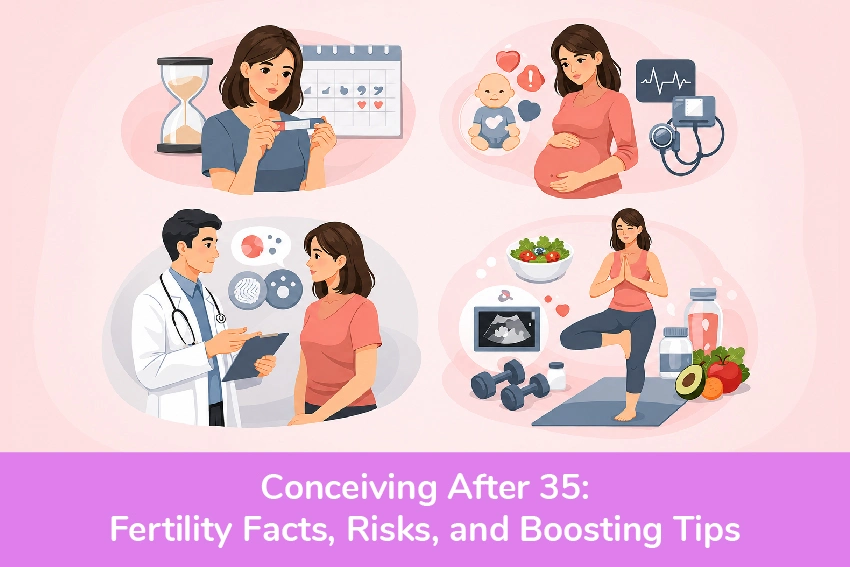
In recent years, there has been an increase in the number of women opting to have or grow their families later on in life. Either due to career aspirations, personal preparedness, or the condition of life, trying to conceive after 35 has become a growing trend. Although it is quite normal to be concerned with the issue of fertility and possible risks, the positive aspect is that most women manage to have a healthy pregnancy in their mid- and late 30s and later. Using the best knowledge, timely medical advice, and taking the initiative towards health, getting pregnant at 35 is entirely possible.
A] Fertility Changes After 35
With age, women experience a natural decrease in fertility because of an alteration in the number and quality of eggs. Ovarian reserve starts to decline faster by 35, and eggs are at a higher risk of chromosomal abnormalities. Several changes may also affect ovulation after 35 years old due to hormonal changes, which means that cycles are less predictable. Such biological changes do not imply that one cannot get pregnant; it just might require more time and planning. The first step to dealing with expectations and making informed decisions is to understand these changes.
Planning a Pregnancy After 35?
B] Chances of Getting Pregnant After 35
The chances of getting pregnant after 35 are less than during the 20s, yet a great number of women naturally become pregnant. A healthy 35-year-old woman has an average of 15-20 percent or so of conceiving a baby per cycle. Nevertheless, such factors as lifestyle, general health, and reproductive history have a major impact. Although they might be longer, timelines can be enhanced through consistency and appropriate tracking for those 35 and trying to get pregnant.
C] Common Challenges With Conceiving After 35
Late-pregnancy women can have some difficulties, such as:
- Irregular ovulation: Hormonal changes may cause unpredictable cycles.
- Reduced egg reserve: Reduced ovarian reserve has an effect on fertility potential.
- More risk of complications: Greater chances of complications of pregnancy.
These issues may complicate trying to conceive after 35 but are not impossible. Early intervention and sensitivity can be used to address these issues.
D] Health Risks to Be Aware Of
Late pregnancy (after 35 years old) is associated with some risks that need more attention. These are increased likelihood of miscarriage, gestational diabetes, hypertension, and chromosomal abnormalities such as Down syndrome. Although these risks may be alarming, prenatal care and early screening can help ease the complications to a considerable degree. Being aware of over 35 pregnancy risks that are linked to pregnancy enables women to prevent and pursue timely medical advice to have a safer pregnancy experience.
E] Tips to Improve Fertility
There are several ways to boost fertility and improve your chances of conception:
- Adopt a healthy lifestyle: Maintain a balanced diet, exercise regularly, and avoid smoking or excessive alcohol consumption
- Track ovulation: Use ovulation kits or apps to identify fertile windows
- Focus on nutrition: Include fertility-friendly foods
- Reduce stress: Practice mindfulness, yoga, or relaxation techniques
You can also prepare your body for pregnancy with expert-backed tips. Small, consistent changes can make a significant difference when trying to conceive after 35.
F] When to See a Fertility Specialist
When you have been actively trying for half a year and have not achieved success, then it is better to book a gynaecologist appointment or refer to a fertility specialist. The initial testing can be done to find out the underlying problems and increase your likelihood of conception. The faster intervention is advantageous to women over 35, because time is a determining factor in fertility.
G] Fertility Treatments & Options
In case of difficulties with natural conception, there are a number of assisted reproductive methods:
- IUI (Intrauterine Insemination): Inserts sperm into the uterus.
- IVF (In Vitro Fertilisation): Fertilisation is done outside the body prior to embryo transfer.
- Egg freezing or donor eggs: Alternatives in case of low ovarian reserve.
These medications have enabled lots of women to conceive successfully, even in their late 30s and early 40s. Depending on your condition, a specialist is able to suggest the most appropriate one.
Still have questions? Our experts are here to help.
Conclusion
Although age reduces fertility, it is not impossible to get pregnant at 35. Through consciousness, appropriate timing, and proper medical care, most women end up with healthy pregnancies and infants. The trick is to know your body and cope with the difficulties at the earliest, as well as make wise lifestyle and medical decisions. With Women’s Healthcare, a private gynaecologist in London, be proactive and be in a position to take charge of your fertility process.
FAQs

Mr Nilesh Agarwal
Mr Nilesh Agarwal (GMC: 6059455) is a highly esteemed consultant gynaecologist based in London, specialising in high-risk obstetrics, minimal access surgery, and fertility. With over 20 years of international experience, he provides comprehensive, patient-centred care for conditions including endometriosis, fibroids, and polycystic ovaries. Known for his holistic approach and clinical excellence, Mr Agarwal is dedicated to empowering women through tailored treatments. He currently practises at leading institutions, including the Clementine Churchill Hospital and the Hospital of St John & St Elizabeth.