

Why Bleeding After Sex Happens: Causes to Know
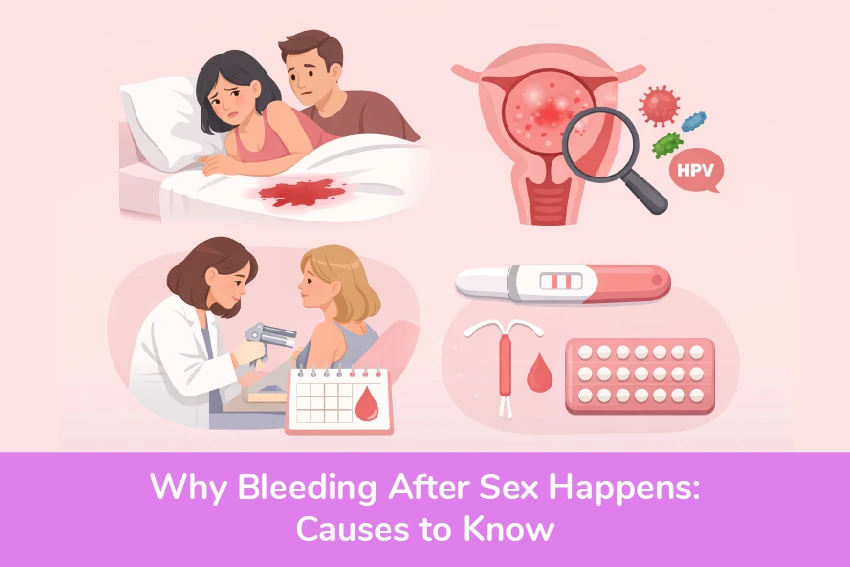
Vaginal bleeding can be a cause of concern when it is observed after engaging in sex, particularly when the cause is not known. In some cases, light spotting can be a result of slight irritation and is not necessarily severe. But occasionally bleeding during or after intercourse may be an indication of a health problem that should be addressed.
Understanding the causes of bleeding after sex can enable you to know when it is normal and when you need medical consultation. These changes are worth attention since it is necessary to protect reproductive health and to make sure that any possible concerns are brought to light in the initial stages.
A] Is Bleeding After Sex Normal?
Light spotting after intercourse in occasional cases may occur due to some obvious reasons. The friction on the vaginal area during intercourse, particularly when it is dry, may occasionally result in small drops or irritation that results in slight bleeding. The bleeding in such cases normally subsides rapidly and might never recur.
Some individuals experience bleeding after sex first time, which can be attributed to stretching or a slight change of tissues. However, in case bleeding occurs regularly or increases in intensity, it is necessary to consult a medical practitioner to learn the cause.
Worried about bleeding after sex? Book a confidential consultation today.
B] Common Causes of Post-Sex Bleeding
A vaginal bleeding after sex may have a number of common causes. Vaginal dryness is one of the most prevalent reasons. In a case where the vaginal region fails to secrete enough natural lubrication, sexual activity may aggravate the tissue friction.
Bleeding may also be caused by infections. Some infections may lead to the inflammation of the cervix or vaginal walls and make them sensitive. Much more minor injuries or irritation with some products, as well as rough intercourse, can also lead to spotting.
Whether the bleeding occurs on a recurring basis or other symptoms are associated, then it is advisable to consider the potential causes of bleeding after sex with a healthcare professional.
C] Hormonal Changes and Their Role
Hormones play an important role in vaginal health. Changes in hormone levels can sometimes make the vaginal tissue thinner or more sensitive. This can lead to bleeding during or after intercourse.
Hormonal changes may occur due to birth control methods, pregnancy, breastfeeding, or menopause. Lower estrogen levels can make the vaginal lining more delicate, which may increase the chance of irritation.
When someone wonders why am I bleeding after sex, hormonal shifts are often one of the possible explanations, especially during certain life stages.
D] Medical Conditions Linked to Bleeding
In some cases, blood discharge after sex may be linked to certain medical conditions. For example, cervical polyps are small growths on the cervix that can sometimes bleed when touched during intercourse.
Pelvic infections or inflammation of the cervix can also lead to bleeding. Conditions that affect the reproductive organs may sometimes cause spotting after sexual activity.
Because there are different possible reasons for bleeding after sex, it is important not to ignore symptoms that happen often or worsen over time. Reliable information about related concerns can be found through resources like common sexual health concerns in women.
E] When Should You See a Doctor?
While occasional spotting may not always be serious, some symptoms should not be ignored. If bleeding happens frequently, becomes heavy, or is accompanied by pelvic pain, it is important to seek medical advice.
Other warning signs include unusual discharge, pain during intercourse, or bleeding between periods. These symptoms may indicate an infection or another condition that needs treatment.
If you are unsure whether bleeding after sex normal, consulting a healthcare professional can help provide clarity and reassurance.
F] Diagnosis and Medical Tests
For complaints like bleeding after sex, the doctor tends to start with history-taking and the symptoms. This assists in determining potential triggers or patterns.
Physical examination can also be carried out to examine the cervix and vaginal region. In other instances, a physician might prescribe sexual health checks, such as swabs to test for infections or other screening tests to test reproductive health.
G] Prevention and Self-Care Tips
Simple steps that could be used to alleviate irritation and discomfort during intercourse. Dryness and friction can be avoided by using sufficient lubrication during sex.
Good sexual health practices, such as frequent check-ups and safe sex, can also be used to prevent infections. It can also be effective to pay attention to hygiene and use products that do not irritate sensitive areas.
In case of persistence of symptoms or the concern about how to stop bleeding after sex, professional advice is the most effective way of knowing what is causing what, and so that proper care is taken.
Looking for a Private Gynaecologist in London?
Conclusion
Bleeding after sex is uncomfortable, and it is better to know what might have happened and how to react to it. In other instances, a slight irritation or dryness can cause temporary spotting. Nevertheless, continued bleeding can also indicate some underlying health issue that should be addressed.
One of the critical aspects of reproductive health is listening to your body and observing the changes in your symptoms. In case of bleeding often or of any concern, it is most appropriate to talk to a healthcare professional and implement adequate diagnosis and treatment. For guidance or support in case of bleeding symptoms, you should consider booking an appointment with an expert.
FAQs

Mr Nilesh Agarwal
Mr Nilesh Agarwal (GMC: 6059455) is a highly esteemed consultant gynaecologist based in London, specialising in high-risk obstetrics, minimal access surgery, and fertility. With over 20 years of international experience, he provides comprehensive, patient-centred care for conditions including endometriosis, fibroids, and polycystic ovaries. Known for his holistic approach and clinical excellence, Mr Agarwal is dedicated to empowering women through tailored treatments. He currently practises at leading institutions, including the Clementine Churchill Hospital and the Hospital of St John & St Elizabeth.