
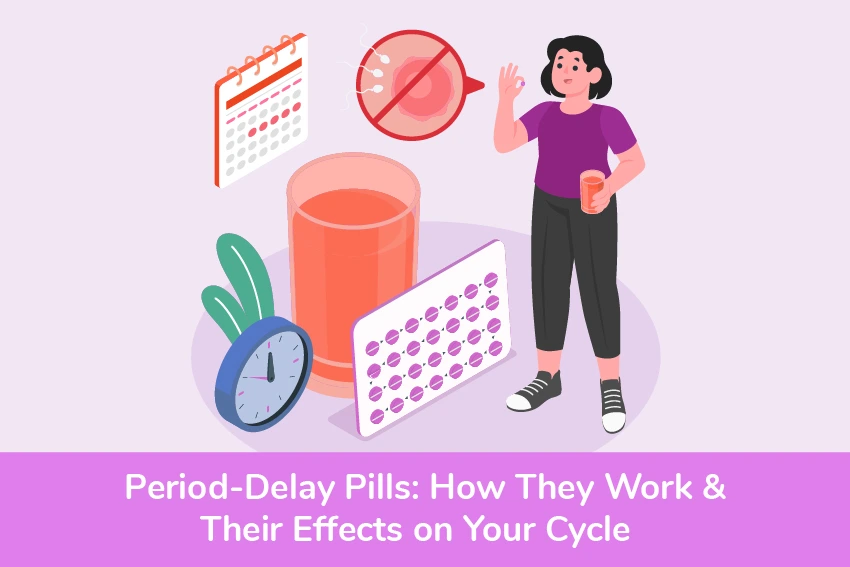
For many women, having the ability to delay a menstrual cycle can be incredibly useful, whether it’s for travel, a big event, sports competitions, or simply personal comfort
Period-delay pills, often containing the hormone norethisterone, offer a temporary solution for how to delay your period safely under medical supervision.
But many wonder: Can period-delay pills affect my menstrual cycle long-term? Are they safe?
In this detailed guide, we explore what these medicines do, potential menstrual cycle irregularities, and side effects of period-delay pills, along with when it’s appropriate to use any medicine for delaying periods.
A] What Are Period-Delay Pills?
Period-delay pills are usually prescription medications designed to temporarily prevent the onset of menstruation. The most common is norethisterone, a synthetic form of progesterone. When used properly, typically three days prior to your due date, they maintain the levels of progesterone, and the uterine lining does not shed.
This is not the same as contraception. While some hormonal contraceptives can also be used for menstrual cycle delay, norethisterone does not protect against pregnancy.
A lot of women seek pills to delay their period; however, they should never be used without the counsel of a physician. In case you are not sure what method is appropriate for you, call a specialist.
Understand the side effects before delaying periods
B] How Do Period-Delay Pills Work?
It is good to know how your cycle usually works so that you can know the effect of period-delay pills on your body. The menstrual cycle operates on a fine balance of hormones, primarily oestrogen and progesterone.
You can read more about menstrual physiology here: What Is Menstruation, Symptoms, and the Menstrual Cycle.
Regularly taken norethisterone maintains artificially high levels of progesterone. Since falling progesterone is what initiates menstruation, the pill basically freezes everything until you cease to take the drug.
C] Is It Safe to Delay Your Period?
This is a common concern. Generally, yes, for short-term, occasional use. Most healthcare professionals consider norethisterone safe when prescribed for temporary menstrual delay.
However, there are some considerations:
- It should not be used regularly or repeatedly without medical supervision.
- Women with certain health conditions, such as liver disease, blood-clotting disorders, or hormone-sensitive cancers, may not be suitable candidates.
- Smokers over 35 may need extra caution due to increased clotting risks.
If you frequently need to delay your period or experience heavy or painful cycles, it may signal an underlying condition such as menorrhagia. You can explore your treatment options for heavy bleeding here by contacting heavy periods (menorrhagia) services.
D] Can Period-Delay Pills Affect My Menstrual Cycle?
Short-Term Effects
Once you stop taking the pills, your period will usually begin within two to four days. Most women resume their normal cycle right away. However, some may notice:
- A slightly earlier or later next cycle
- Temporary spotting
- A heavier first bleed due to prolonged build-up of the uterine lining
These effects are typically mild and short-lived.
Long-Term Effects
When used occasionally, period-delay pills do not cause long-term menstrual cycle disruption. They don’t impair fertility or permanently alter hormones.
However, frequent use may cause:
- Menstrual cycle irregularities
- Recurrent spotting
- Difficulty predicting future cycles
If used too often, the body’s natural rhythm may take longer to recalibrate.
E] Side Effects of Period-Delay Pills
Like any medication, norethisterone may cause side effects. The most common include:
- Bloating
- Nausea
- Headaches
- Tender breasts
- Mood swings
- Mild skin changes
- Fatigue
These occur because your body reacts to increased progesterone levels.
Less common but more serious side effects include:
- Increased risk of blood clots
- Elevated blood pressure
- Jaundice (rare)
These risks are generally small, but they highlight why you should avoid self-prescribing any medicine for delay period and instead seek proper medical guidance.
F] Will Period-Delay Pills Affect Fertility?
No, period-delay pills do not affect fertility. Since they only postpone menstruation temporarily, ovulation remains mostly unaffected in the long run. You can conceive normally once your cycle resumes.
If, however, you experience challenges such as consistently irregular cycles, unusually heavy bleeding, or extended gaps between periods, it may be a sign of an underlying condition such as PCOS, fibroids, or hormonal imbalance. Seeking specialist care is advisable.
G] Are There Alternatives to Pills for Menstrual Cycle Delay?
Yes. Depending on your situation and medical history, alternatives include:
1. Combined Contraceptive Pill
If you’re already using contraception, continuous use of combined pills can reliably delay your period.
2. Hormonal IUD or Implant
While not used specifically for delaying a single period, they may reduce or stop bleeding over time.
3. Lifestyle Adjustments
Stress, travel, poor sleep, and weight fluctuations can all naturally delay a period, but this is not a reliable or healthy method.
Before choosing any option, consult a healthcare specialist. Getting personalised guidance ensures your approach to how to delay your period is both safe and effective.
H] When Should You Avoid Period-Delay Pills?
You should NOT take period-delay pills if you:
- Are pregnant or suspect pregnancy
- Have a history of clotting disorders
- Take certain medications that interact with hormones
- Have unexplained vaginal bleeding
- Have liver disease or certain cancers
In these cases, delaying a period may be unsafe. Always seek professional advice before using hormonal medication.
I] When to See a Doctor?
If you experience any of the following, speak to a healthcare professional:
- Severe or prolonged side effects
- No period after stopping the pills for more than two weeks
- Extremely heavy bleeding afterward
- Repeated need to delay menstruation
- Ongoing menstrual cycle irregularities
You can reach out for professional help at Women’s Healthcare.
Looking for a Private Gynaecologist in London?
Final Thoughts
So, can period-delay pills affect your menstrual cycle?
Yes, in mild and temporary ways, generally. To the majority of women, these medications are a safe and easy way for menstrual cycle delay, as long as they are used sporadically and under a doctor’s recommendation. Side effects of period-delay pills are relatively minor and do not frequently cause long-term problems.
Yet, they do not give a lasting solution to recurring menstrual issues. When you often find yourself in need of pills to delay your period, or when you have naturally irregular periods, it is time to have a specialist take a look into the reason.
Your menstrual health is an important part of your overall well-being. For expert support, resources, and personalised care, visit Women’s Healthcare.

Neha Goel
Neha Goel, a Psychology alumna and MBA graduate from CASS Business School, London, brings together her expertise as a Reiki Practitioner and Practice Manager. She integrates psychology and business strategies to foster holistic well-being and personal development.