
Fibroids Explained: Symptoms, Causes, Treatment
Fibroids are gynaecological conditions that are prevalent in women, but some women have been suffering without being diagnosed. These benign tumors usually grow without any symptoms, and they get confused with normal period problems or hormonal fluctuations.
Because fibroids are diverse in size, quantity, and position, their effects can be extremely minor or very disruptive. Early detection is important in the prevention of complications and enhancement of the quality of life. Knowledge of fibroids, their causes, symptoms, and treatment help women to pursue quality and timely care.
A] What Are Fibroids?
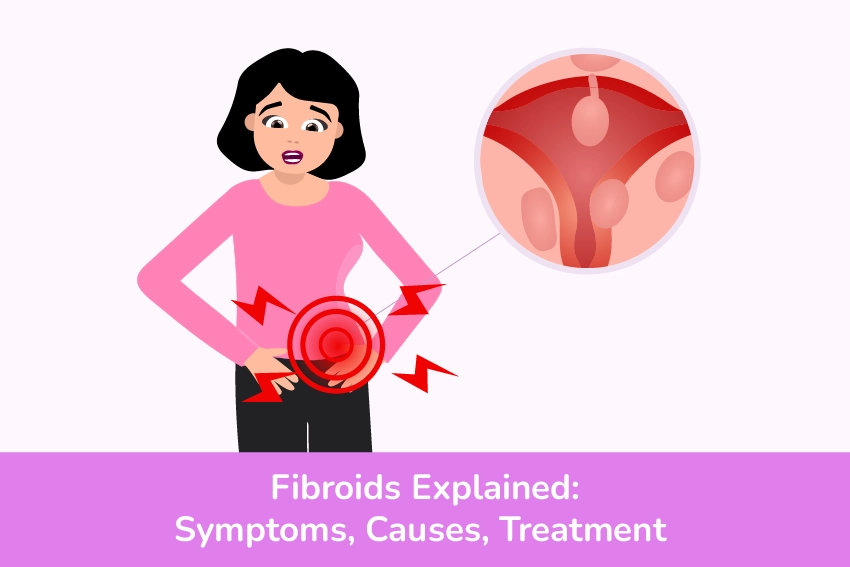
Fibroids are benign tumors that grow inside or outside the uterus. Fibroids in women, medically referred to as uterine leiomyomas, consist of muscle and fibrous tissue and are of all sizes, ranging from as small as a seed to huge masses that deform the uterus.
They are mostly experienced by women in their reproductive years, especially between the ages of 30 and 50 years. Their growth is affected by hormonal activity, particularly oestrogen and progesterone. Although most women have fibroids without the knowledge, some of them have symptoms that disrupt their normal life. It is important to notice symptoms of fibroids at an early stage, and regular visits to an expert can help in early diagnosis.
Don’t ignore fibroid symptoms. Get expert medical advice today.
B] Types of Fibroids
There are several types of fibroids depending on the location of their growth in the uterus. The site is a significant factor that helps identify symptoms and treatment choices.
The main types include:
- Intramural fibroids, which develop in the uterine wall, are the most common.
- Submucosal fibroids, which grow directly under the uterine lining, are associated with excessive bleeding.
- Subserosal fibroids are formed over the external surface of the uterus and can bulge against other organs.
Fibroids are capable of producing severe symptoms even when of small size. Knowledge of the type enables physicians to determine whether the patient requires monitoring or treatment.
C] Causes of Fibroids
The cause of fibroids is not well known, although some factors are known to cause them. Fibroids causes and treatment have close connections with hormonal and genetic factors.
Key contributing factors include:
- Hormonal activity, especially oestrogen and progesterone, stimulates fibroid growth.
- Genetic predisposition, as fibroids usually follow families.
- Lifestyle factors, including obesity, diet, and the level of stress.
Women with some hormonal problems are also more likely to develop fibroids. It is important for women to consult an expert to understand the fibroids and PCOS similarities and differences.
D] Common Symptoms of Fibroids
Fibroid symptoms vary depending on size, number, and location. Some women experience no symptoms at all, while others face daily discomfort.
Common symptoms include:
- Heavy or prolonged menstrual bleeding
- Pelvic pressure or fullness
- Lower back pain
- Frequent urination due to pressure on the bladder
- Pain during intercourse
Fibroids and pelvic pain often go hand in hand, particularly when fibroids press against nerves or nearby organs. Severe bleeding can also lead to fatigue or anaemia, making it important not to ignore persistent or worsening symptoms.
E] Are Fibroids Dangerous?
In most cases, fibroids are benign and not life-threatening. However, they can become problematic when they grow large or cause severe symptoms.
Fibroids may require urgent medical attention if they lead to:
- Excessive bleeding causing anaemia
- Severe, unrelenting pelvic pain
- Rapid growth or sudden changes in symptoms
Fibroids can also affect fertility and pregnancy, depending on their location. Submucosal fibroids, in particular, may interfere with implantation or increase the risk of complications. Early assessment helps prevent avoidable risks.
F] How Fibroids Are Treated
Treatment of fibroids varies according to the symptoms, age, plans for reproduction, and general health. Fibroids do not necessarily need to be treated.
Treatment approaches include:
- Follow up, small, asymptomatic fibroids.
- Medication to control bleeding or temporary fibroid shrinkage.
- Non-surgical, including uterine artery embolisation.
- Surgery, such as myomectomy or hysterectomy, in extreme cases.
Many women wonder, can fibroids be cured? While fibroids can be removed or controlled, they may recur, especially if hormonal triggers remain. Structured care plans, such as those offered through specialised fibroids tests and monitoring services, help ensure treatment is appropriate and timely rather than reactive.
G] When to See a Specialist
Persistent symptoms should never be dismissed as “normal.” Heavy bleeding, ongoing pelvic pain, or pressure symptoms deserve medical evaluation.
Seeing a specialist allows for:
- Accurate diagnosis through imaging and tests
- Personalised treatment planning
- Ongoing monitoring when treatment isn’t immediately required
For women beginning this journey, understanding what to expect during evaluation can be reassuring. Many find it helpful to review a first visit guide before seeking care.
Looking for a Private Gynaecologist in London?
Conclusion
Fibroids are a normal, treatable condition at an early stage. Although they are generally harmless, untreated fibroids may have serious consequences on comfort, fertility, and quality of life. Symptom awareness, knowledge of treatment choices, and professional advice would all be the difference. Through an appropriate care approach, women can safely and effectively deal with fibroids while maintaining long-term reproductive health.

Mr Nilesh Agarwal
Mr Nilesh Agarwal (GMC: 6059455) is a highly esteemed consultant gynaecologist based in London, specialising in high-risk obstetrics, minimal access surgery, and fertility. With over 20 years of international experience, he provides comprehensive, patient-centred care for conditions including endometriosis, fibroids, and polycystic ovaries. Known for his holistic approach and clinical excellence, Mr Agarwal is dedicated to empowering women through tailored treatments. He currently practises at leading institutions, including the Clementine Churchill Hospital and the Hospital of St John & St Elizabeth.