
Important Signs of Reproductive Health Problems
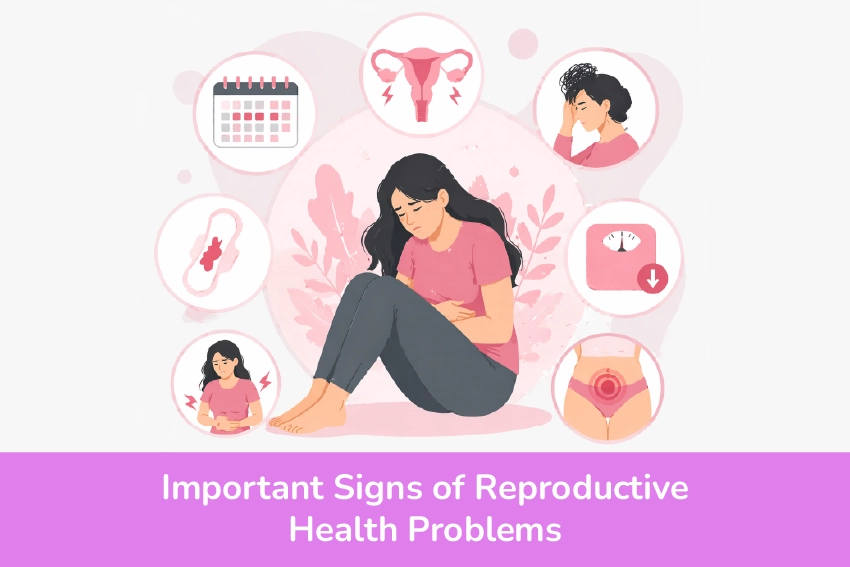
Reproductive health is an important part of the general well-being, and most of the population ignores early warning signs that can point to any possible issues. Altered menstrual cycles, persistent discomfort, or any other somatic manifestations may occasionally represent health issues. Early identification of reproductive health symptoms enables one to consult with a doctor before the situation deteriorates. Knowing warning signs can avoid complications and contribute to healthy living in the long term.
The knowledge of the common reproductive health problems in women also promotes early medical intervention and enhanced knowledge on the normal patterns and changes in the body.
A] Why Reproductive Health Awareness Matters
Female reproductive health involves being conscious of body changes. Most of the reproductive disorders build up over time, and the initial symptoms can be mild or easily overlooked. Nevertheless, it is also possible to notice these changes and report on possible health problems earlier.
Knowledge about signs of poor reproductive health enables one to consult a doctor prior to the development of more severe symptoms. Consistent health screening and observation of menstrual patterns, level of pain, and other symptoms promote reproductive health and general health.
Not sure if your symptoms are normal? Get clarity now.
B] Irregular or Missed Periods
Variations in menstrual cycles may at times reflect reproductive issues. Although rare abnormal intervals can be induced by stress, change of lifestyle, or hormonal variations, constant abnormalities might need medical examination.
Early or late periods, excessive bleeding, or a period that is persistently longer or shorter may indicate hormonal disorders, thyroid diseases, or other reproductive health issues. Fertility may also be impaired in some instances by these symptoms.
Keeping track of menstrual cycles will assist in establishing trends and early detection of possible reproductive health issues in women. In case irregular periods are more frequent, a visit to a healthcare professional can be used to identify the cause of the situation. In certain situations, doctors may recommend diagnostic procedures such as hysteroscopy for fertility to examine the uterus and identify possible underlying causes.
C] Persistent Pelvic Pain
Pelvic pain that continues for long periods should not be ignored. While mild discomfort during menstruation can be common, persistent or severe pain may signal underlying reproductive health issues.
Conditions such as infections, ovarian cysts, endometriosis, or other gynecological problems may cause ongoing pelvic discomfort. Pain that interferes with daily activities or worsens over time should be evaluated by a medical professional.
Recognizing pelvic pain as one of the possible reproductive health symptoms can help individuals seek appropriate medical care and prevent complications.
D] Unusual Vaginal Bleeding
Out-of-the-regular menstrual cycle bleeding may at times be an indication of a health issue. This can comprise observation between periods, post intercourse hemorrhage, or excessively heavy bleeding.
The spotting can be frequently caused by hormonal changes, although frequent or unexplained bleeding needs a doctor’s examination. Abnormal bleeding in certain instances can be associated with infections, hormonal disruption, or other gynecological diseases.
Early signs of poor reproductive health can be followed by monitoring menstrual patterns and unusual bleeding. Medical consultation helps in ensuring that one does not hold off on any issue that may arise.
E] Changes in Vaginal Discharge
As a normal process of reproductive health, vaginal discharge is expected; however, the changes in colour, smell, or consistency can be an indicator of infection or other issues.
Discharge is generally clear or white, and it does not produce discomfort. Nonetheless, a yellowish, greenish, thick, or itchy/irritated discharge might indicate infection.
Understanding the relationship between discharge and female reproductive health could assist individuals in acknowledging when the symptoms should be addressed in a medical facility. Constant modifications are to be considered to detect potential reproductive health problems and to find out the proper treatment.
F] Pain During Intercourse
Another symptom that cannot be overlooked is the pain during intercourse. Though some discomfort can be caused by dryness or temporary irritation, the chronic pain can be a sign of some underlying reproductive issues.
It may be caused by infections, inflammation, hormonal changes, or some medical conditions related to the reproductive system. Intercourse pain may also impact a relationship and emotional well-being when not treated.
In case of discomfort, it can be useful to report the symptoms to a medical professional. The potential issues with reproductive health among women can be detected early and receive proper care.
G] When to Seek Medical Advice
Recognizing when to seek professional help is an important step in managing reproductive health symptoms. If symptoms such as persistent pelvic pain, irregular periods, unusual bleeding, or abnormal discharge continue for an extended period, medical evaluation is recommended.
A healthcare professional can assess symptoms, perform necessary tests, and provide treatment if needed. Early diagnosis can help prevent complications and support long-term reproductive health.
If you are unsure when to see a gynaecologist, consulting a specialist through Women’s Healthcare can provide guidance and reassurance. Individuals experiencing symptoms or concerns can also arrange a consultation through contacting the clinic for professional advice.
Looking for a Private Gynaecologist in London?
Conclusion
It is important to know the early symptoms of reproductive health issues to remain healthy in general. Nausea, abnormal menstrual cycles, chronic pelvic pain, abnormal vaginal discharge, or excessive bleeding may cause reproductive health issues.
Listening to these warning signals and consulting a doctor when necessary, one will be able to tackle the possible issues before they develop further. The long-term reproductive and general health can be supported by keeping an eye on female reproductive health and seeking the services of qualified healthcare providers in case of symptoms.
FAQs

Mr Nilesh Agarwal
Mr Nilesh Agarwal (GMC: 6059455) is a highly esteemed consultant gynaecologist based in London, specialising in high-risk obstetrics, minimal access surgery, and fertility. With over 20 years of international experience, he provides comprehensive, patient-centred care for conditions including endometriosis, fibroids, and polycystic ovaries. Known for his holistic approach and clinical excellence, Mr Agarwal is dedicated to empowering women through tailored treatments. He currently practises at leading institutions, including the Clementine Churchill Hospital and the Hospital of St John & St Elizabeth.